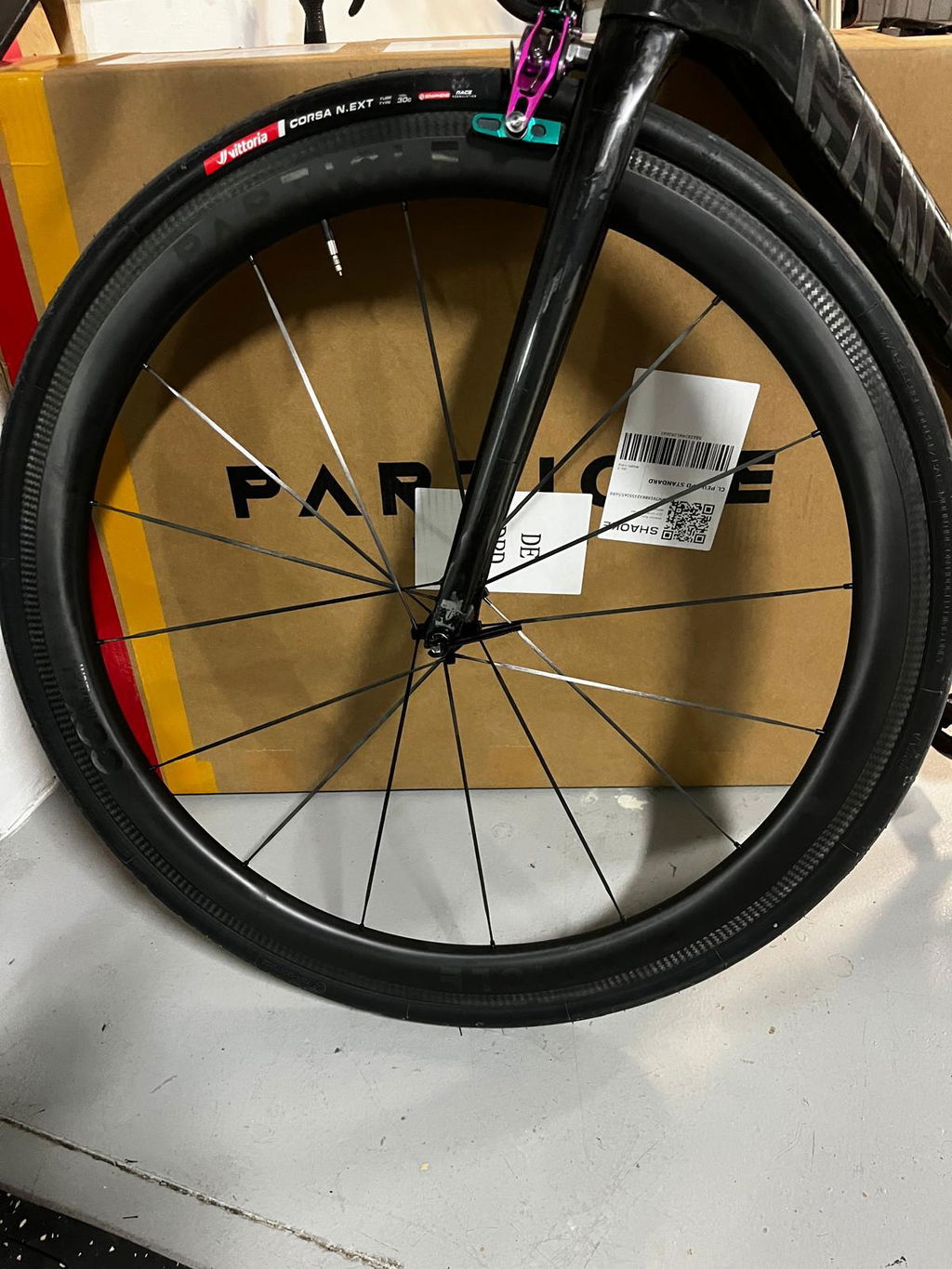
Stiffness, weight, and aerodynamics win the purchase decision, but warranty and crash support dictate the long-term cost of owning a carbon wheelset.
Warranty and crash coverage can be very different from one brand to another, and those differences matter whether the wheelset is for road racing, gravel miles, or mountain use.
Some brands focus on material or manufacturing defects, while others build a separate crash replacement program for impact damage.
Understanding both sides helps set expectations before a dent, crack, or rebuild bill changes the value equation.

How Warranty and Crash Policies Work
Standard warranty coverage protects against defects in materials or workmanship, while crash replacement coverage addresses accident damage that happens after normal purchase.
Wheels need both because they face two separate risks: failures that show up through no fault of the rider, and impacts that come from racing, trail hits, transport mishaps, or a bad line in a corner.
A brand can be generous on one policy and strict on the other, so the useful question is not just whether coverage exists, but what kind of damage each policy actually pays for.
Bridging Durability and Support: The Particle Approach
Particle bridges this gap by pairing cutting-edge manufacturing technology with straightforward Western customer support.
The brand produces ultra-lightweight, high-impact carbon wheelsets paired with direct, rider-first warranty and lifetime crash replacement policies.
Operating under Hong Kong Common Law protections, Particle combines advanced carbon manufacturing with transparent, hassle-free post-purchase support.
Warranty Covers Defects, Not Impacts
A warranty usually applies when a wheel fails because of material or manufacturing defects, such as delamination, a bad bond, or an assembly problem that shows up under normal use.
That is different from crash damage, which comes from a strike, spill, or collision. Typical warranty length ranges from one year to several years, and some brands offer a lifetime warranty for defects on certain wheels or rims.
Even strong policies generally exclude wear and tear, so brake track wear on rim brake wheels, bearing fatigue, and ordinary service items do not belong in a defect claim.
Crash Replacement Covers Accidents
Crash replacement programs are built for impact-related failure, whether the wheel is bent, cracked, or structurally compromised after a wreck.
The discount model varies widely: some brands cover the replacement free of charge in limited cases, while others offer 25% - 50% off the suggested retail price.
In practice, the final bill can include the rim only, a complete wheel, parts for a rebuild, labor, or shipping.
That flexibility sounds helpful until a rider compares the real out-of-pocket cost and finds that not every crash replacement program is equally generous.

What Carbon Wheel Warranties Usually Include
Most reputable brands define warranty coverage in a fairly similar way, even if the fine print differs. Buyers should expect protection against genuine defects, a clear claim process, and proof that the wheel was purchased correctly.
For carbon wheels, these details matter because strong warranty claims reduce long-term repair risk and support resale value.
Eligible Failures and Ownership Rules
Common covered failures include structural defects, premature failure under normal riding, and assembly issues that point back to the factory.
Most brands restrict full warranty benefits strictly to the original owner and require mandatory registration to activate protection. Particle simplifies this by covering standard website purchases automatically for 3 years from delivery (or purchase date via dealers).
Coverage includes rims, spokes, and nipples for 3 years, with hubs covered for 1 year (plus optional 5-year or lifetime rim coverage extensions).
If a covered model or component is ever discontinued during your warranty window, Particle automatically upgrades you to the newest equivalent model at no extra charge.
Common Exclusions and Service Rules
Cosmetic damage (scuffed decals, chipped clear coat), normal wear items (bearings, ratchets, valves), and external impacts from crashes, potholes, or improper setup are standard exclusions across the industry.
Misuse—such as exceeding weight or tire pressure limits, or using road wheels off-road or on e-MTBs—will also void coverage.
Where policies diverge is in claim execution and shipping costs. While many brands require riders to pay return freight for inspection, Particle covers all shipping fees for verified defect claims.
Diagnostics are handled directly via photo/video review with an experienced technical team, and repairs can be completed through Particle’s growing service network or your local bike shop.
How Crash Replacement Programs Are Structured
Crash replacement policies handle damaged wheels in real life when normal warranties end—specifically addressing high-energy impacts, trail debris strikes, transport damage, or race incidents.
The structure of these programs varies widely across the market. While a few premium brands market a so called "free replacement", that policy model relies on harsh economic realities: either the cost is baked directly into an inflated upfront purchase price, or the brand takes on unsustainable long-term financial liabilities that threaten its ability to survive and honor future claims.
Consequently, the vast majority of stable manufacturers rely on standardized percentage discounts off retail pricing to maintain business viability while offering real post-crash relief.
The technical workflow of a claim often dictates its true value just as much as the headline discount.
A policy that looks generous on paper can quickly become costly and time-consuming if a rider is required to ship a complete wheelset overseas for physical inspection, cover bidirectional freight fees, or discover during teardown that coverage applies exclusively to a bare rim—leaving hub transfers, new spokes, and wheel-building labor billed at full shop rates.
Typical Discount Models
| Policy Style | How It Usually Works | Best For |
|---|---|---|
| Fixed-price replacement | Brand sets one replacement cost after crash approval | Riders who want predictability |
| Percentage discount | Commonly applied as a discount off the suggested retail price. | High-end carbon wheelsets with traditional retail markups |
| Sliding-scale offer | Discount changes based on model, age, or damage type | Brands trying to balance flexibility and control |
The baseline retail price matters far more than the headline percentage. A large discount on a traditional retail brand often still results in a massive bill due to distributor markups.
Furthermore, some programs force you to replace the entire wheelset even if only a single rim is damaged.
Particle eliminates this markup trap by offering a flat 25% discount direct to the rider across all individual components—whether you need a full wheel, just the rim, a hub, or individual carbon spokes.
You only pay for what actually broke. Additionally, if your specific rim depth or model is ever discontinued, Particle automatically upgrades you to the newest equivalent model at no extra charge, ensuring you are never left with an obsolete setup.
Repair Versus Replacement
Not every claim ends with a brand-new wheel. If the rim is the only damaged part and the hub, spokes, and bearings are still sound, a brand may approve a repair or rebuild instead of a full replacement.
That can be a good outcome when labor is modest and parts are available, but it becomes less attractive if the rebuild cost creeps toward the price of a new wheelset.
Shipping may be included, shared, or billed separately, so the true value of the claim often depends on the service network as much as on the stated discount.
Brand Differences in Warranty and Crash Coverage
The biggest differences between brands usually show up in coverage length, transferability, and claim simplicity.
Some manufacturers are strict about original ownership and proof of purchase, while others build more goodwill into the program.
For buyers comparing carbon wheel brands, the practical question is whether the policy supports long-term ownership or mainly protects the first sale.
That distinction can matter just as much as weight, hub engagement, or aerodynamics.
Original Owner Only Versus Transferable Coverage
Policies that protect only the first buyer can be fine for someone planning to keep the wheelset for years, but they reduce resale value.
Transferable coverage, even if limited, makes wheels easier to buy and sell used because the next rider inherits some protection.
In many cases, subsequent owner terms are shorter or narrower, so the real benefit is not full parity but retained confidence.
That can be especially relevant for premium wheels that may change hands after an upgrade.
Lifetime Warranty and Lifetime Crash Terms
Lifetime sounds simple, but in warranty language it usually means the brand will support the product for as long as it is owned by the original buyer, subject to exclusions.
A lifetime warranty generally applies to defects, not crash damage, and it does not erase limits on misuse, maintenance, or cosmetic damage.
Lifetime crash terms are rarer and usually still involve a discounted replacement rather than a free one. In other words, “lifetime” is reassuring, but it is never a blank check.
How Long Do Carbon Wheels Last in Real Use
Carbon wheel lifespan is not defined by a single number on the calendar. A well-built wheelset can last for years under normal riding, but service history, impacts, and maintenance often matter more than age.
Riders on rough gravel, aggressive road descents, or technical trails put more stress on the wheel than riders on smoother terrain.
For buyers weighing warranty and crash support, the useful question is how long the wheel stays reliable before service costs start to outweigh the remaining value.
What Affects Wheelset Lifespan
Rider weight, terrain, braking style, and spoke tension all influence how long wheels stay healthy. A lightweight, stiff wheel can perform beautifully for years if it is matched to the rider and maintained correctly, while a harsh setup may fatigue quickly under repeated impacts.
Poor storage, neglected bearings, and hard knocks shorten usable life fast, and cosmetic wear can hide more serious issues if the wheel is never inspected. In real terms, care and load management matter as much as design.
When Replacement Becomes Smarter Than Repair
Repair makes sense when the damage is isolated and the rebuild cost stays well below the suggested retail price of a new wheelset.
Replacement becomes the smarter move when damage keeps coming back, when parts availability is poor, or when labor and shipping push the total close to new-wheel pricing.
Older models may also lose support or have fewer parts in circulation, which makes a perfectly acceptable wheel harder to maintain. Once the repair bill starts behaving like a down payment, replacement usually wins.
How to Check a Policy Before You Buy
A quick policy review can save a lot of frustration after the first incident or the first resale listing. The best carbon wheel crash replacement policy is not always the one with the biggest headline discount; it is the one that fits the rider’s use case, budget, and ownership timeline.
Buyers who ask the right questions upfront usually end up with fewer surprises later, especially when warranty and crash terms are split across different channels or dealers.
Questions to Ask the Brand or Dealer
Ask who is covered, what types of damage are included, and how long the warranty or crash replacement program lasts.
Confirm whether registration, receipts, or authorized dealer purchase are required, because missing paperwork can slow a claim or shut it down entirely.
It is also worth checking whether shipping, labor, rebuild work, and replacement parts are included, since those costs can change the real value of the policy more than the discount rate does.
Best Value Signals to Look For
The best value usually shows up in clear crash replacement program terms, low claim friction, and honest damage definitions.
Transferability can improve resale value, while a lifetime warranty on defects can be reassuring for buyers investing in premium wheels.
Broad eligibility matters too, especially if the brand distinguishes carefully between cosmetic damage, wear and tear, and true crash damage. The right policy does not just sound strong; it actually reduces the cost and hassle of keeping the wheelset in service.
For most riders, the smartest purchase is the wheelset that balances performance with a policy that matches real-world use.
Carbon fiber wheels are expensive enough that warranty and crash terms should be part of the decision, not a footnote after the order ships.
If the brand is clear about defects, transparent about crash replacement, and realistic about exclusions, the ownership experience tends to be better from the first ride to the first repair.