Choosing the best road bike wheels can transform your cycling experience, enhancing speed, comfort, and efficiency. Whether you race competitively or enjoy long weekend rides, the right wheelset is crucial. This comprehensive guide covers expert-reviewed options, key considerations, wheel types, and maintenance tips to help you select high-performance road bike wheels tailored to your needs and budget.

Top Picks: Best Road Bike Wheels Worth Buying in 2026
In 2026, the road bike wheel market offers exceptional choices spanning premium, performance, and budget tiers. Whether you seek the lightest climbing wheels, aerodynamic aero sets, or versatile all-road options, there’s a wheelset to fit your style and terrain. Ultra-Premium-tier wheels are relatively rare. These wheels come in at under 1kg for the pair. Examples include the Particle RCX27 Hyperlight, weighing just 835 grams and the Particle GCX Hyperlight Series. Premium-tier wheels like the Zipp 454 NSW, Particle Ultralight Series, and ENVE SES 4.5 stand out for cutting-edge carbon construction, aerodynamic profiles, and top-tier hubs tailored for racers and enthusiasts seeking maximum speed and stiffness. These wheels excel in responsiveness but come with a higher price tag.
Performance-tier wheels, such as the Particle RCX and GCX Ultralight Series, Hunt Aero Wide 34 SL and Bontrager Aeolus RSL 62, blend aerodynamics and weight-savings effectively. Their design balances stiffness and comfort, making them great for riders wanting all-around capabilities without breaking the bank. They often include tubeless compatibility and durable carbon rims optimized for mid-depth profiles ideal for varied uses.
For budget-conscious riders, value carbon wheels like the Particle RCX Team and Light series, Particle GCX Team and Light series, Scribe Core Superlight 60 and alloy options including DT Swiss ER1400 offer solid durability and respectable performance. These sets usually sacrifice some weight and advanced features but remain great for training and daily riding with dependable build quality. Key trade-offs across tiers often involve rim depth versus weight, aerodynamic gains versus crosswind handling, and price versus technology. Particle wheels have without a doubt the best value for money, offering wheels with significantly higher specs for a fraction of the price.
| Tier | Examples | Strengths |
|---|---|---|
| Ultra Premium | Particle RCX27 Hyperlight ($1999USD), Particle GCX Hyperlight ($1999USD) | Good aerodynamics, ultra-lightweight, durability, stiffness |
| Premium | Particle RCX and GCX Ultralight ($1399) Zipp 454 NSW($4200USD), ENVE SES 4.5 ($2850USD) | Good aerodynamics, lightweight, stiffness |
| Performance | Particle RCX and GCX Light ($1199) Hunt Aero Wide 34 SL, Bontrager Aeolus RSL 62 ($2970USD) | Balanced aero and weight |
| Value | Particle RCX and GCX Team ($999) Scribe Core Superlight 60($1199USD), DT Swiss ER1400 ($2110USD) | Durability, affordability |
Quick takeaway: If you prioritize fastest aero performance and low weight, ultra-premium and premium carbon wheels lead. For versatile, year-round use, mid-depth performance wheels provide an excellent balance. Budget wheels give reliable ride quality suited for training or entry-level upgrades. Consider your terrain, riding goals, and compatibility needs before selecting.
How to Choose the Best Road Bike Wheels for You
Upgrading your road bike wheels is one of the most impactful modifications you can make. Wheels influence acceleration, climbing, aerodynamics, comfort, and handling. Choosing the best wheels starts with understanding your riding priorities, budget, and the conditions you typically face.
The first key factor is your intended use. Are you focused on racing, fast group rides, climbing mountainous terrain, or commuting year-round? Racing demands lightweight, stiff, and aerodynamic wheels to cut seconds off your time. Climbers benefit from shallow rim depths and light rims for easy acceleration uphill. Ultra Premium wheels offer both. For everyday riding and varied roads, wheels that balance comfort, weight, and aero efficiency work best.
Next, consider terrain and riding style. Smooth pavement suits deep-section aero wheels for minimizing drag, while roads with rough patches or gravel call for wider rims and tubeless compatibility to ensure grip and durability. Riders who face changing weather and seasons want wheels that offer reliability and easy maintenance. Budget should also be weighed carefully to find the best value without overspending on features you may not fully utilize.
Prioritizing aerodynamics, weight, stiffness, and durability is essential. Aero wheels reduce wind resistance at higher speeds but can be heavier and more sensitive to crosswinds. Lightweight wheels accelerate quickly and climb efficiently but sometimes sacrifice aerodynamics. Stiffness relates to power transfer and handling precision; a stiffer wheelset feels more responsive but may transmit more road vibrations. Durability matters to withstand impacts and maintain performance over time.
Compatibility cannot be overlooked. Make sure your new wheelset matches your bike’s frame clearance, brake type (disc or rim), and drivetrain (freehub body compatibility). Axle sizes and spacing must align to avoid costly fitting issues. Also check tubeless tire compatibility if you plan on going tubeless for lower rolling resistance and puncture protection. Particle wheels have five different freehub options and are all tubeless ready.
Evaluating these factors with your personal riding goals will help you target the best road bike wheels ideal for your usage and budget.
Types of Road Bike Wheels and Their Best Uses
Climbing Wheels
Climbing wheels are designed to be lightweight, with shallow rim depths typically under 30mm and a low spoke count. This design reduces rotational mass, making it easier to accelerate and maintain speed uphill. The shallow rims also improve compliance, absorbing terrain vibrations to keep you comfortable during long climbs.
Advantages include quick acceleration, enhanced responsiveness, and reliable handling on steep gradients. Typical weight targets vary by budget: premium climbing wheels like the Roval Alpinist SLX weigh under 1350g per pair, while value options may weigh around 1600g. At Particle, we have been able to bring to market a wheelset weighing from just 835g per pair. The RCX27 Hyperlight is our lightest wheelset ever. Despite its super low weight, it is UCI approved and can survive more than twice the UCI Vertical Impact Test standard. The GCX45 and GCX52 Hyperlight also both weigh under 1kg, making them also perfect for climbing despite them not being climbing specific wheels. Common low spoke counts range from 16 to 20 spokes for reduced weight and aerodynamic drag.
Climbing wheels suit competitive racers, hill climb specialists, and anyone prioritizing efficient uphill performance.

Mid-Depth Aero Wheels
Mid-depth wheels, commonly featuring rim depths between 35 and 50mm, strike a versatile balance between aerodynamic gains and manageable weight. These wheels perform well across a variety of riding situations from hilly terrain to flat roads and offer all-around road use capability. Examples of this include the GCX Hyperlight series wheels, as well as the rest of the non-climbing specfic wheels from the Particle lineup.
The rim widths on these sets have evolved wider internally (around 19-21mm) to optimize tire profile and aerodynamics, improving handling and comfort when matched with wider tires. The aerodynamic benefits improve speed in varied conditions without the extreme crosswind sensitivity of deeper rims. Some wheels are getting even wider, such as the Particle GCX series, which features 25mm inner widths, making them perfect for wider road tires as well as gravel
This category is ideal for riders seeking a “do-it-all” wheelset suitable for group rides, sportive events, and everyday aero performance.
Deep-Section Aero Wheels
Deep-section aero wheels feature rim depths of 50mm or more, excelling in reducing aerodynamic drag for flat, fast riding. Their teardrop-shaped profiles minimize turbulence and boost top speed, making them popular for time trials and triathlons. Particle offers many wheelsets at different price points between 50-60mm.
Trade-offs include increased sensitivity to crosswinds, heavier weight compared to shallow rims, and sometimes more challenging handling. Specialized riding skills and race-specific conditions often justify these wheels.
Riders focused on racing, high-speed flat course events, or time trials will benefit most from deep-section wheels if they can manage their unique handling characteristics.
All-Road and Gravel Compatible Wheels
All-road and gravel wheels offer increased versatility with wider internal rim widths (21-25mm), enhanced compliance, and durable construction suitable for light gravel and rougher surfaces. Tubeless compatibility is a common feature, allowing riders to run lower pressures for increased comfort and puncture resistance.
Examples include the ENVE SES 4.5 and Cadex 50 Ultra Disc wheels, which blend aerodynamic efficiency with rugged profiles. Wheelsets designed for gravel also incorporate robust hubs and spoke builds for long-term durability. Our offering for riders looking for this level of versatility from their wheels without sacrificing performance is the GCX Hyperlight series. We feel it is the ultimate road and gravel wheelset, built for high performance on both surfaces. All of Particle's wheels have between 21-25mm internal rim widths.
These wheels work well for cyclists who ride mixed terrain or want a single wheelset capable of year-round versatility.
Training and Winter Wheels
Training and winter wheels focus on durability, cost-efficiency, and low maintenance. They commonly use alloy rims instead of carbon and feature higher spoke counts to withstand rough ride conditions and frequent use.
The build quality emphasizes strength over weight savings or aero advantages. This approach extends the life of expensive race wheels by keeping training miles separate. At Particle, our carbon rims are just as strong as the strongest alloy rims, each surviving multiple times the UCI requirement. The strongest wheelsets are the RCX and GCX Team wheels, which can survive 3.5x the UCI requirement.
Spoke patterns are often more robust, and these wheels can handle various tyre sizes and conditions. For riders logging extensive training or riding in adverse weather, dedicated sets ensure reliability and safety.
Road Bike Wheel Anatomy & Key Specs Explained
Rim Material and Construction
Road bike rims are primarily made from carbon fiber or aluminum alloy. Carbon rims offer superior stiffness-to-weight ratios, aerodynamic shaping, and compliance benefits but come at higher cost and sensitivity to impact damage. They excel in race and performance contexts.
Aluminum rims can be more affordable, durable, and resistant to braking surface wear but heavier and less aero-optimized. Many training and winter wheels use alloy rims for these reasons.
Carbon rims frequently feature tubeless-ready bead designs and advanced layup techniques to increase strength and impact resistance, though care is needed to avoid rim surface damage, especially on rim brake wheels.
Rim Width and Depth
Internal rim width affects tire profile, impacting comfort, grip, and aerodynamics. Wider internal widths (19-25mm) support wider tires (28-32mm) better, improving rolling resistance and stability. External rim width influences how the wheel slices through the air, related to rim depth and shape. Particle's RCX series wheels are aero optimized for 28c tires, whereas the GCX series wheels are aero optimized for 30c tires.
Rim depth (height) alters wind resistance and weight. Deeper rims reduce aerodynamic drag but may add mass and feel affected by crosswinds. Shallow rims prioritize low weight and crosswind stability.
Spokes and Hub Types
Spokes vary by material—steel is common for strength and durability; carbon spokes reduce weight and improve aerodynamics but cost more. All Particle wheels use the latest 3rd and 4th generation carbon spokes. Rim-to-hub spoke count and lacing patterns affect wheel stiffness and compliance.
Hubs house bearings and engagement mechanisms. High points of engagement (e.g., using star ratchet systems) yield rapid power transfer and crisp responsiveness. Brake Compatibility: Rim vs Disc Brake Wheels
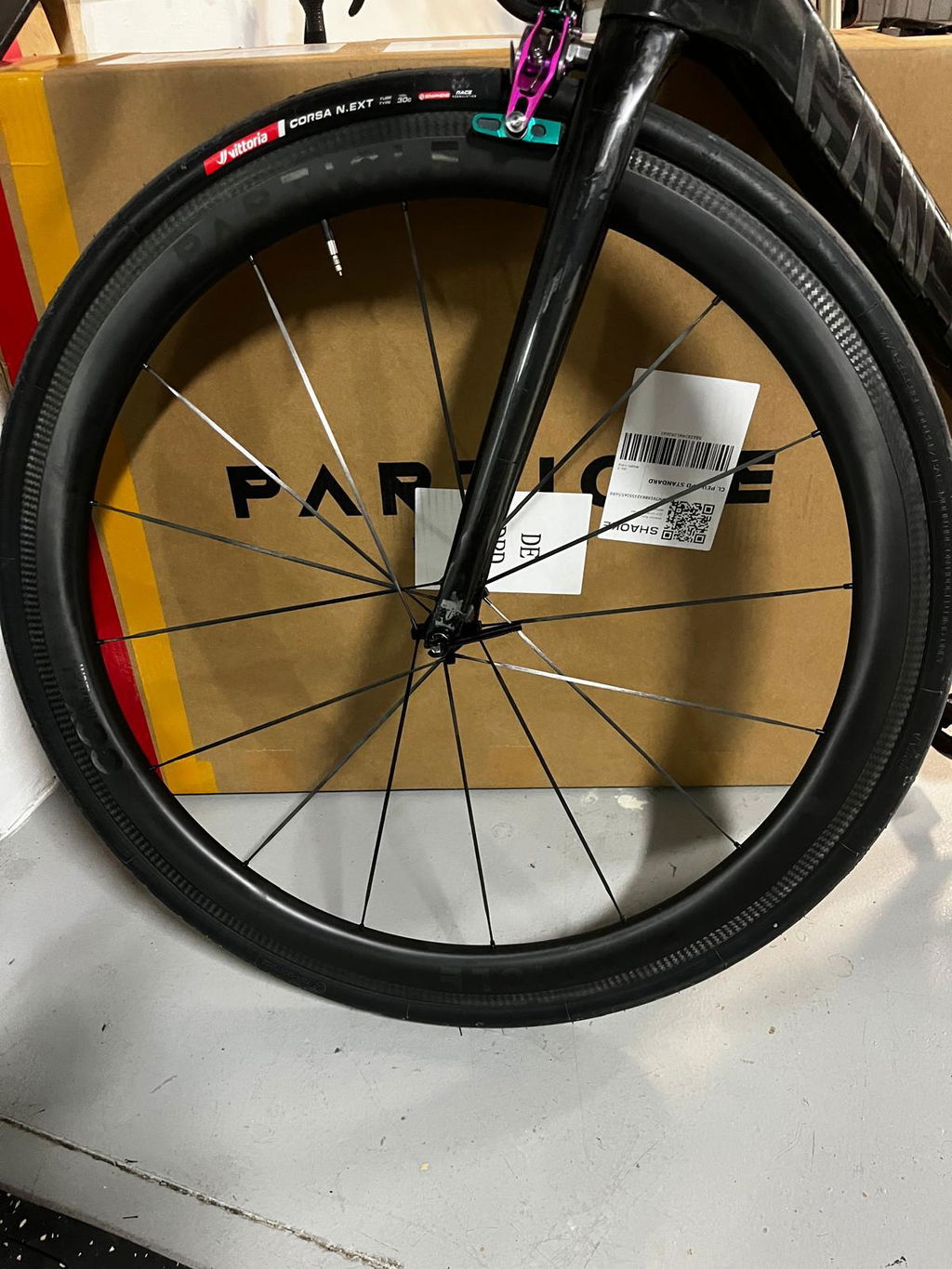
Rim brake wheels feature a braking surface around the rim that requires maintenance and can limit rim material choices. Braking performance depends on pad and rim interface, with some compromises on carbon rims. While most brands no longer sells rim brake wheels, Particle's CCX Ultralight wheels are some of the lightest rim brake wheels available. They are perhaps the first to use 4th generation carbon spokes and weigh as little as 1055g per wheelset.
Disc brake wheels omit the braking surface on the rim and instead mount rotors on hubs. These wheels have distinct structural designs often allowing wider rims and better heat management but require specific frame and fork compatibility.
Axle Standards & Freehub Compatibility
Axle standards vary with bike and brake type. Common sizes for disc brake road bikes include 12x100mm front and 12x142mm rear thru-axles; rim brake wheels use quick-release skewers.
Freehub bodies accept compatible cassettes: Shimano/SRAM standard, SRAM XDR for 12-speed road, and Campagnolo each require matching hubs. Ensure wheelsets fit your drivetrain. Particle offers all of these freehub choices.
Performance Attributes and What They Mean for Riding
Compliance and stiffness directly influence ride quality. Compliance allows some flex under load, smoothing out vibrations for comfort, while stiffness ensures efficient power transfer and precise handling. High lateral stiffness benefits sprinting and cornering. Particle's 4th generation carbon spokes offer a pleasant ride feel while reducing weight. They weigh just 2.1g each including nipples, less than half of the weight of the best steel spokes.
Aerodynamics focuses on reducing drag at varying yaw angles. Real-world performance depends on the interaction between wheel shape, rim width, and tire profile, with mid-depth rims offering the best all-around aero behavior.
Handling and stability under crosswinds vary: deeper rims may buffet in gusty conditions, requiring skill to manage, whereas shallower rims provide calmer steering. Acceleration favors lighter wheels, which spin up rapidly.
Braking performance also varies: disc wheels offer consistent stopping power in all conditions, while rim brake wheels rely on rim surface and pads quality for modulation and fade resistance. Particle's rim brake tracks can withstand 220 degree celsius temperatures, making them suitable for even the most difficult descents.
Carbon Road Bike Wheels: Benefits and Considerations
Carbon fiber is the preferred material for high-performance wheels due to exceptional weight savings, stiffness, and ability to form aerodynamic shapes. Carbon rims use advanced layups to balance compliance and rigidity, enhancing ride quality.
Benefits include improved acceleration, sharper handling, and reduced rolling resistance. Carbon spokes further reduce rotating mass and improve aero efficiency in premium wheelsets.
However, carbon wheels come with higher costs and require careful braking surface considerations if rim brake compatible. Impact damage from crashes or road hazards can lead to costly repairs, so durability depends on construction quality and rider care.
Recent innovations in carbon spoke design and monocoque wheel construction continue to push performance boundaries for elite cyclists.
Tubeless and Tubular Tires: Compatibility and Advantages
Tubeless wheels eliminate the inner tube by creating an airtight seal between tire and rim, offering several advantages over clinchers and tubular tires. Tubeless systems lower rolling resistance and increase puncture resistance due to sealant that plugs small holes.
Hookless rim designs can potentially improve impact resistance but require tubeless tires rated specifically for hookless rims to ensure safety and performance. They are also prone to tire blowouts and are becoming less common due to safety concerns.
All of Particle's wheels feature tubeless hooked/clincher rims offering excellent safety.
Tubular tires, glued or taped directly to rims, have become very unpopular and are rarely sold due to the difficulty of installing them.
Choosing between these options depends on your riding style, race requirements, and maintenance preferences.
Latest Advances in Road Bike Wheel Technology
There have been several advancements in road bike wheel tech. The most prominent is probably the use of carbon spokes. Particle is one of the few brands to use 4th generation carbon spokes. In general, most road wheels still use steel spokes, which are roughly 2-3x the weight inexpensive to produce.
Advances in carbon layups have allowed some manufacturers to produce super light rims that are extremely strong. Some of the most noticeable examples are those used in the RCX and GCX Hyperlight wheels.
Emerging smart wheel features integrate tire pressure sensors and data transmitters, allowing riders to monitor pressure, temperature, and performance metrics in real-time.
Expert Testing & Review Methodology for Road Bike Wheels
Independent, long-term testing remains essential beyond mere spec sheets to evaluate real-world wheelset performance. Tests include ride feel assessments, aero wind tunnel measurements, weight confirmation, durability trials, braking efficiency, and handling in variable conditions. Particle wheels each undergo a large variety of tests to ensure they are strong, high-perfomance, and fatigue resistant.
Testers combine quantitative data from wind tunnel yaw angle analysis with subjective rider impressions to rank wheels across racing, climbing, training, and all-road scenarios.
Such comprehensive evaluations ensure recommendations consider practical trade-offs like crosswind stability, comfort, and noise alongside peak speed.
Maintenance and Longevity: Caring for Your Road Bike Wheels
Regular maintenance preserves wheel performance and longevity. Truing wheels, checking spoke tension, and servicing hubs prevent early wear and provide consistent reliability.
Rim brake wheels require brake track inspection to monitor wear and avoid sudden failure. Tubeless setups need sealant top-ups, rim tape inspections, and tire seating checks to maintain airtight reliability.
Most premium wheel manufacturers offer crash replacement programs and warranties to safeguard your investment. Knowing when to repair or replace wheels depends on damage extent, bearing condition, and rim integrity.
Buying Guide: New vs Second-Hand Road Bike Wheels
Buying new wheels guarantees warranty coverage, pristine condition, and the latest technology. It’s ideal for riders who value reliability and want documented build quality.
Second-hand wheels present a cost-saving option but carry risks such as hidden damage, worn bearings, spoke fatigue, and untrue rims. Thorough inspection is essential including checking for rim cracks, spoke tension balance, hub smoothness, and trueness.
Look for trusted retailers or well-documented sales and ask for service history. Pricing should reflect wear and age — avoid deals that seem too good to be true on high-end wheels.
Frequently Asked Questions About Road Bike Wheels
Are deeper wheels always faster? Not necessarily. Deeper wheels reduce drag at higher speeds and on flat terrain but can be heavier and harder to control in crosswinds. Choose based on your typical riding conditions.
Which rim width should I choose? Internal rim widths between 21-25mm offer the best for modern wider tires. Wider rims help with lower tire pressure and comfort, especially for gravel or mixed surfaces.
Can I mix rim brake wheels with disc brake frames? No. Rim brake wheels require a braking surface and are incompatible with disc brake hubs and axle spacing. Always match wheel brake compatibility with your bike’s brake system.
How do I know if a wheelset fits my bike? Check axle type and spacing, brake type compatibility, tire size clearance, and freehub body matching your drivetrain. Consult manufacturer specs or a bike shop for precise compatibility.
Are tubeless tires worth it? Yes, tubeless tires offer lower rolling resistance, better puncture resistance, and improved comfort but require compatible rims and sealant maintenance.
What are points of engagement in hubs? They describe how quickly the hub engages when you pedal. More points mean faster response and tighter power transfer, beneficial for sprinting and technical riding.
How often should I true my wheels? Ideally after any spoke breakage or noticeable wobble, and regularly during heavy use to maintain optimal ride quality.
Summary & Actionable Tips for Choosing the Best Road Bike Wheels
Choosing the best road bike wheels requires balancing your riding goals, terrain, and budget with the wheelset’s performance attributes. Prioritize compatibility with your bike’s brake and drivetrain system first. Decide what matters most: lightweight climbing efficiency, aerodynamic speed, or versatile durability.
Consider mid-depth aerodynamic wheels for year-round versatility or deep-section carbon wheels for racing speed. For training wheels, allocate budget toward durable alloys or entry-level carbon sets to extend race wheel life. Tubeless compatibility improves rolling efficiency and comfort across the board.
Research reviews and trusted expert tests to understand real-world performance and long-term durability. Regular maintenance and wise buying decisions—especially avoiding mismatched used wheels—will keep you riding faster and safer. Most importantly, tailor your choice to your unique cycling style to maximize satisfaction and gains in 2026 and beyond.